Behind the Scene
Spring Plein Air Demo
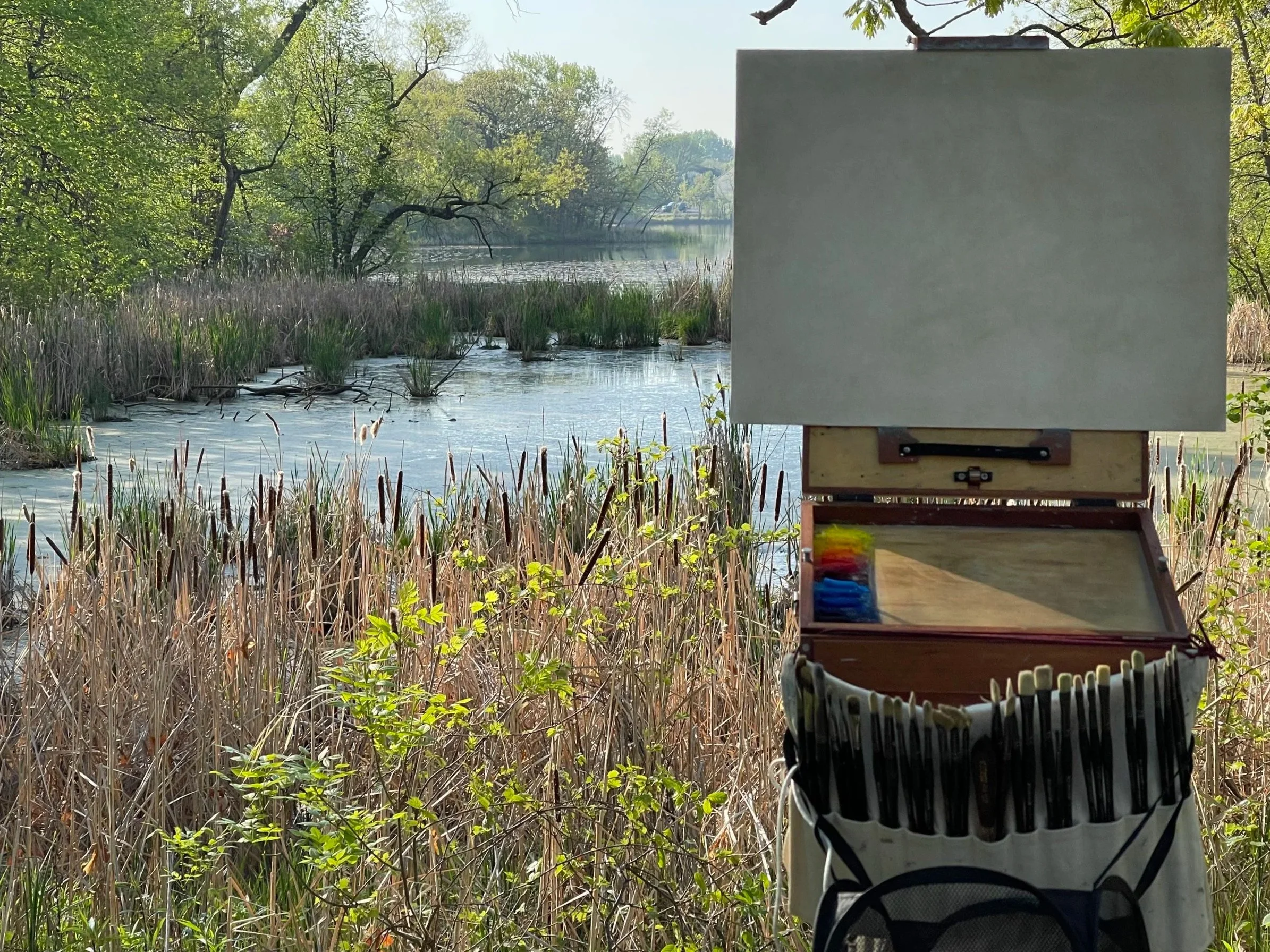
When I saw this view, I knew I had found our venue. It would offer an opportunity to explore the atmospheric perspective, including foreground, middle ground, and background. The trees, reeds, and water would be inviting challenges. I liked it so much, I went back to paint it for myself. The following is an account of how I approached the experience.
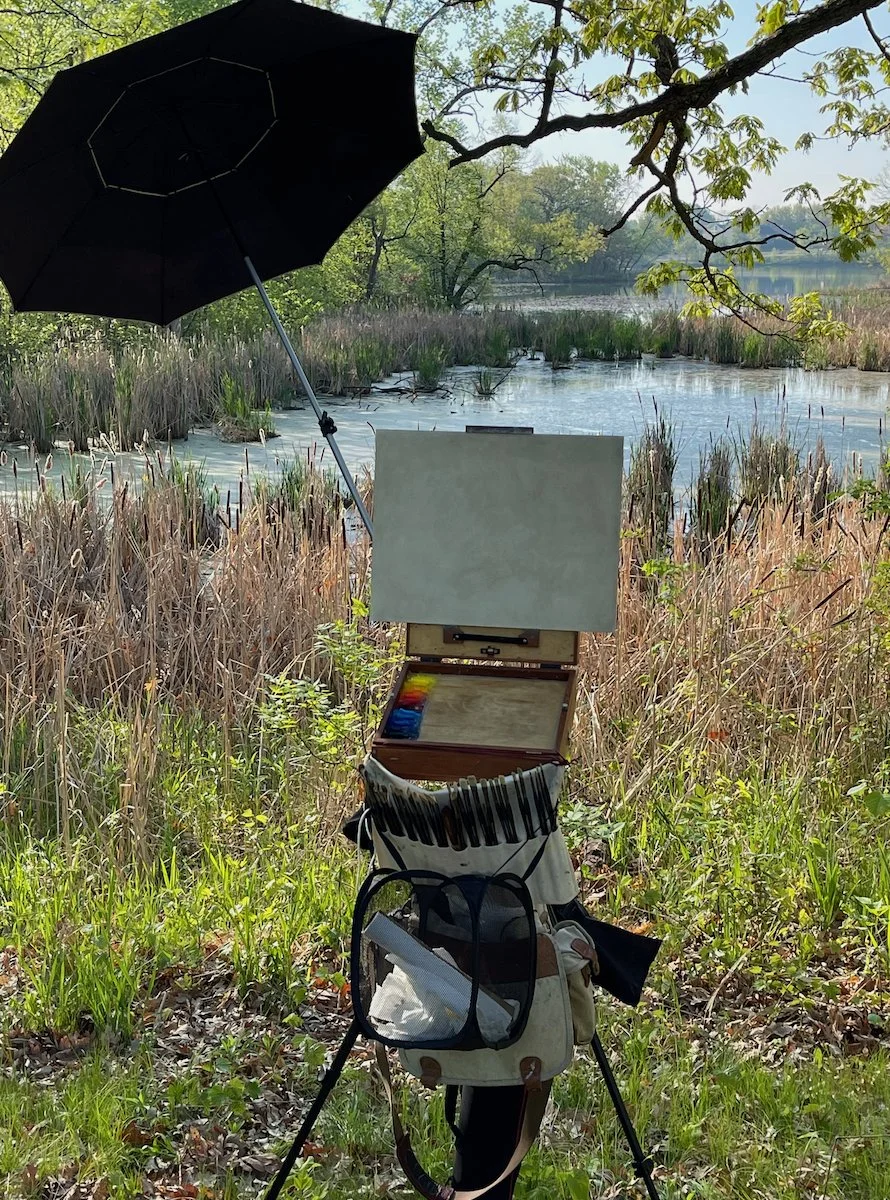
I set up my easel, with my paints, brushes, garbage, and gear bags all within arm's reach.
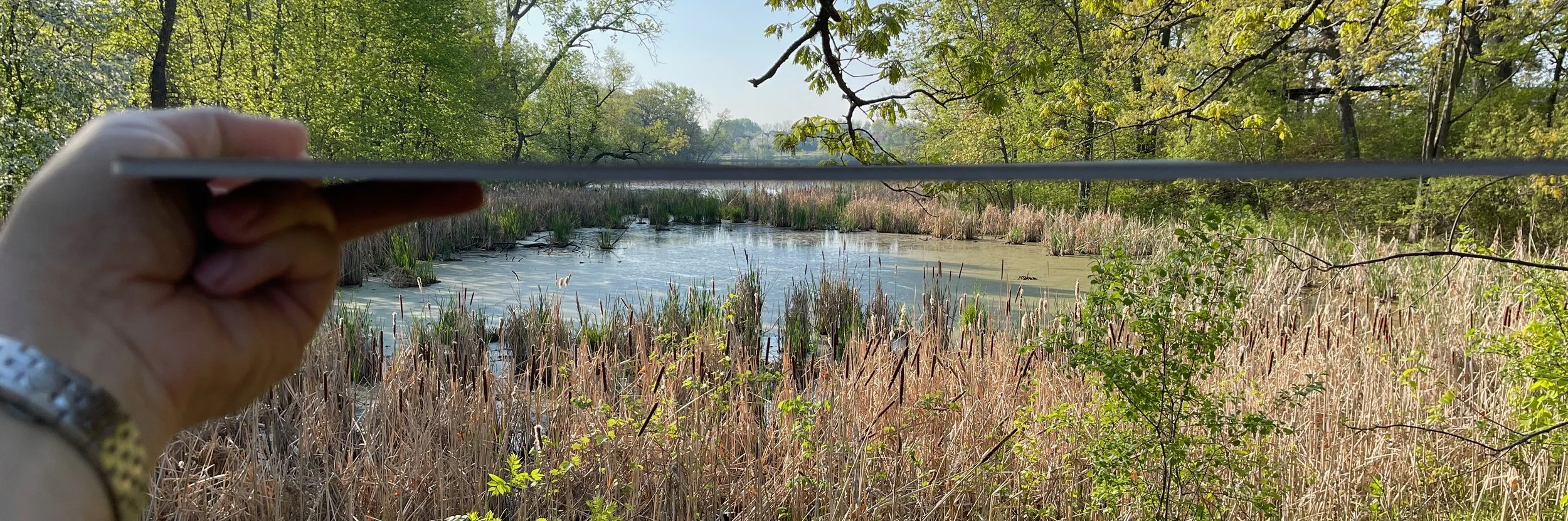
I hold out a panel at eye level to find the horizon from my perspective.

Using a #2 pencil, I draw out the major shapes. If there is a change in plane, there is a line. This drawing is about design, connections, and seeing form. It gets me thinking about the whole picture.
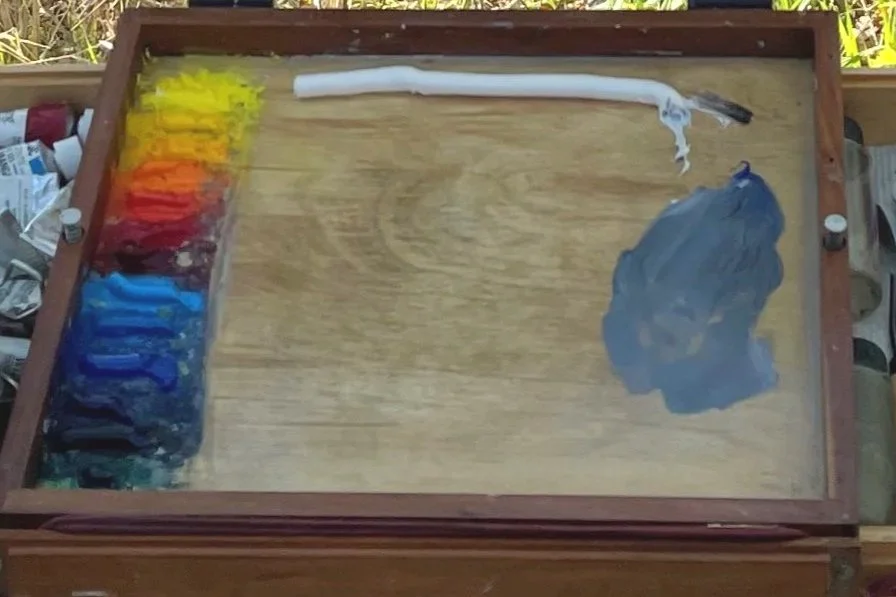
With a paper towel or a wide brush, I 'dampen' my palette and my panel with Gamsol paint thinner, to help the paint move across the canvas and mix on the palette.
I mix Payne's Grey from Ivory Black, Cobalt Blue, and Lead White to create a thin yet not too fluid mix. In the following images, Payne's Grey will be used to create a drawing, and then it will be modified to create shadows, establishing the light effect.
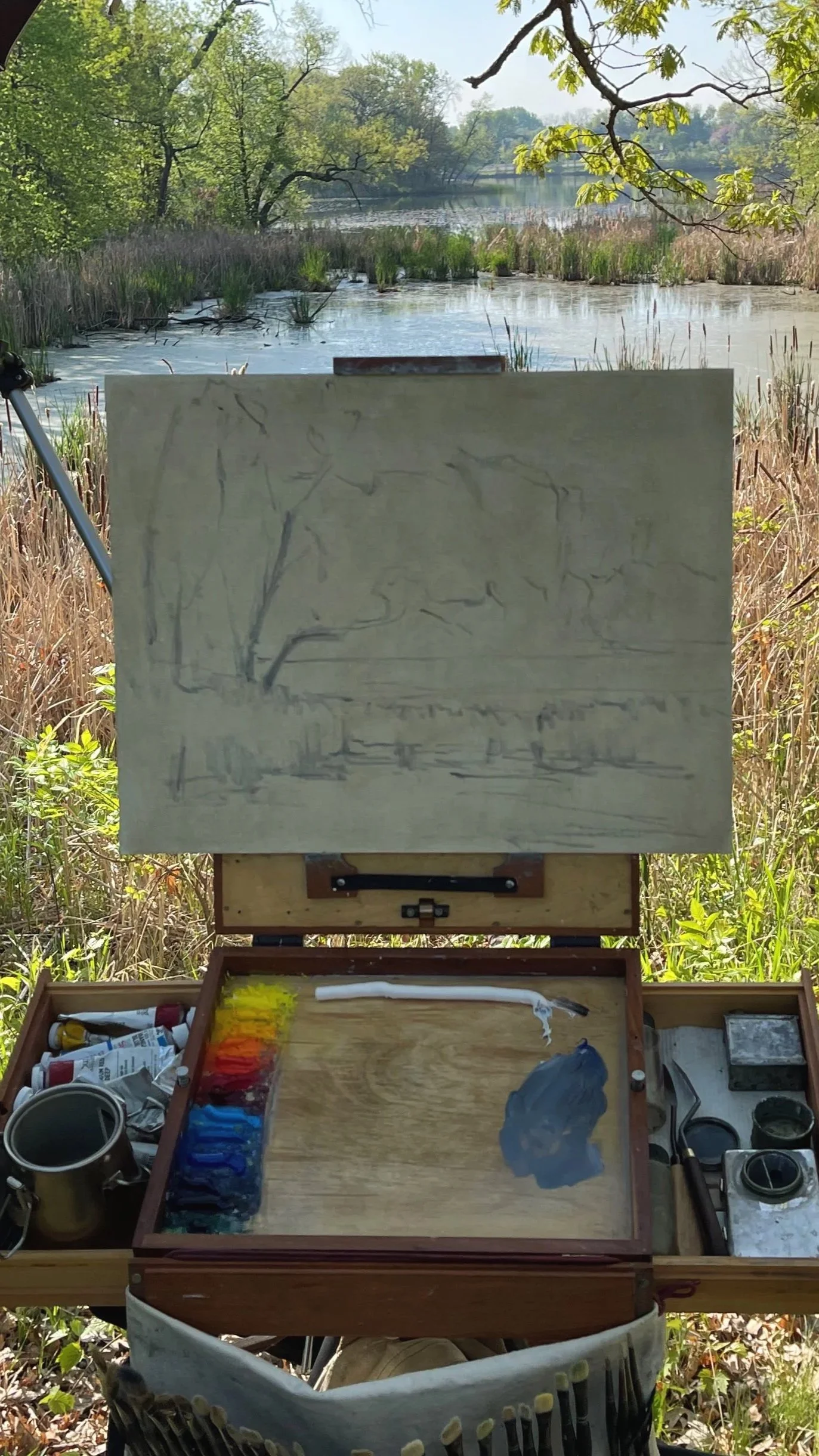
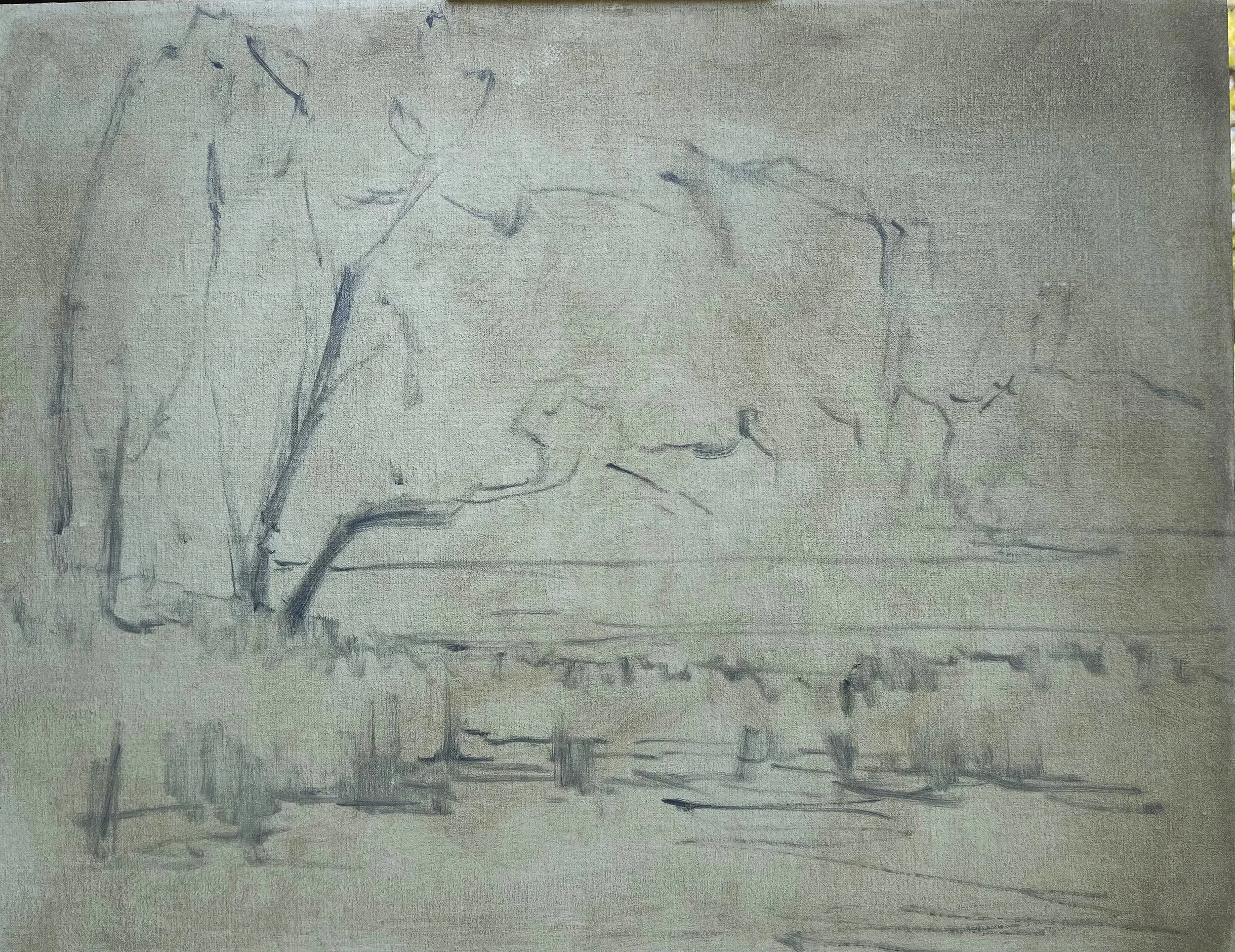
Squinting to see the big shapes, I lightly draw in the main parts of the piece with my long-bristle flat brush. The far and middle shorelines and tree masses, the foreground reeds and trees, and some of the outer edges of the shadows.
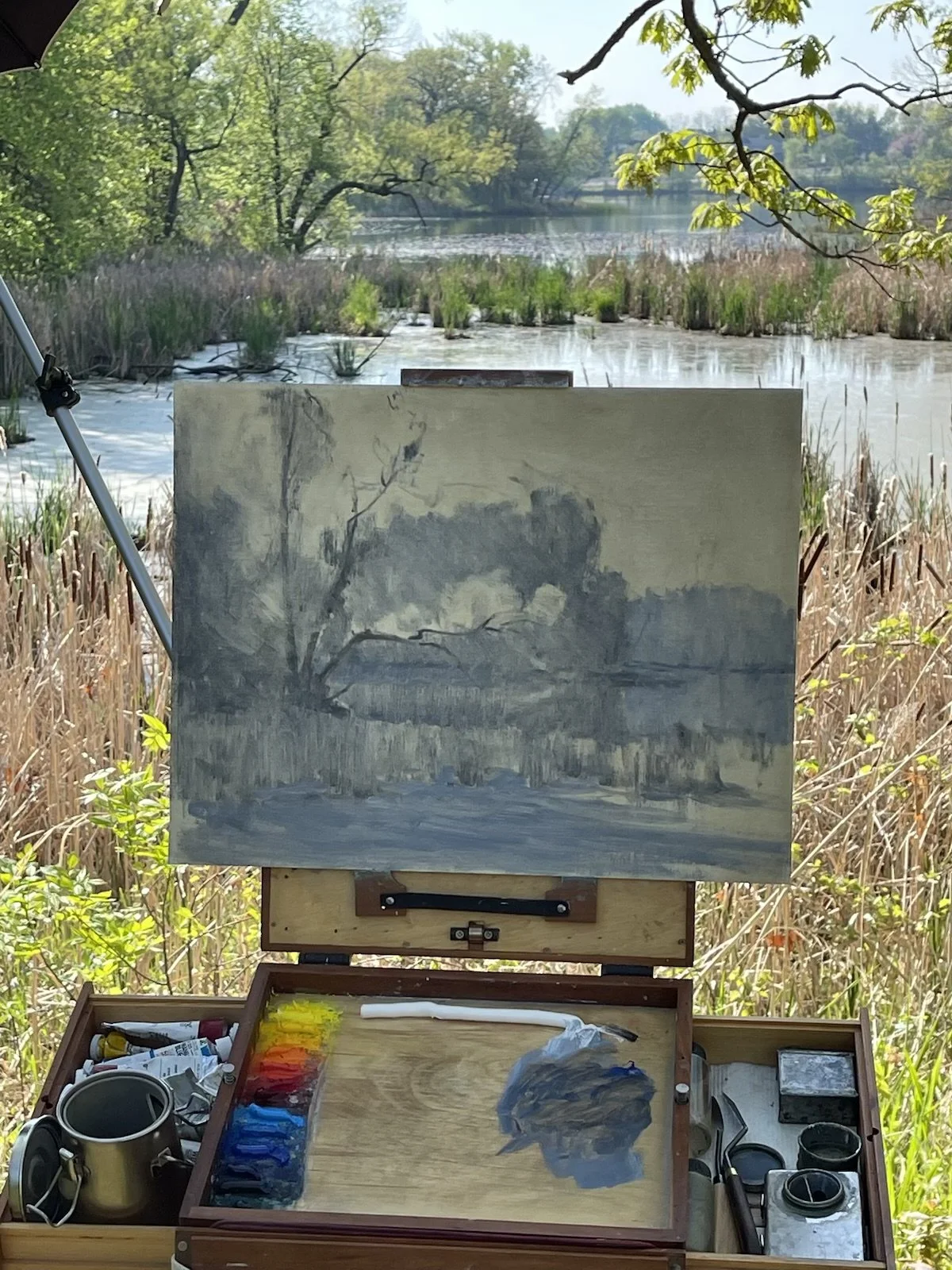
I lay in my Payne’s Grey underpainting, thinly mapping out the shadow shapes, adjusting the value to show plane changes and atmospheric perspective in the shadows. Where there is a change in plane, there is a change in value.
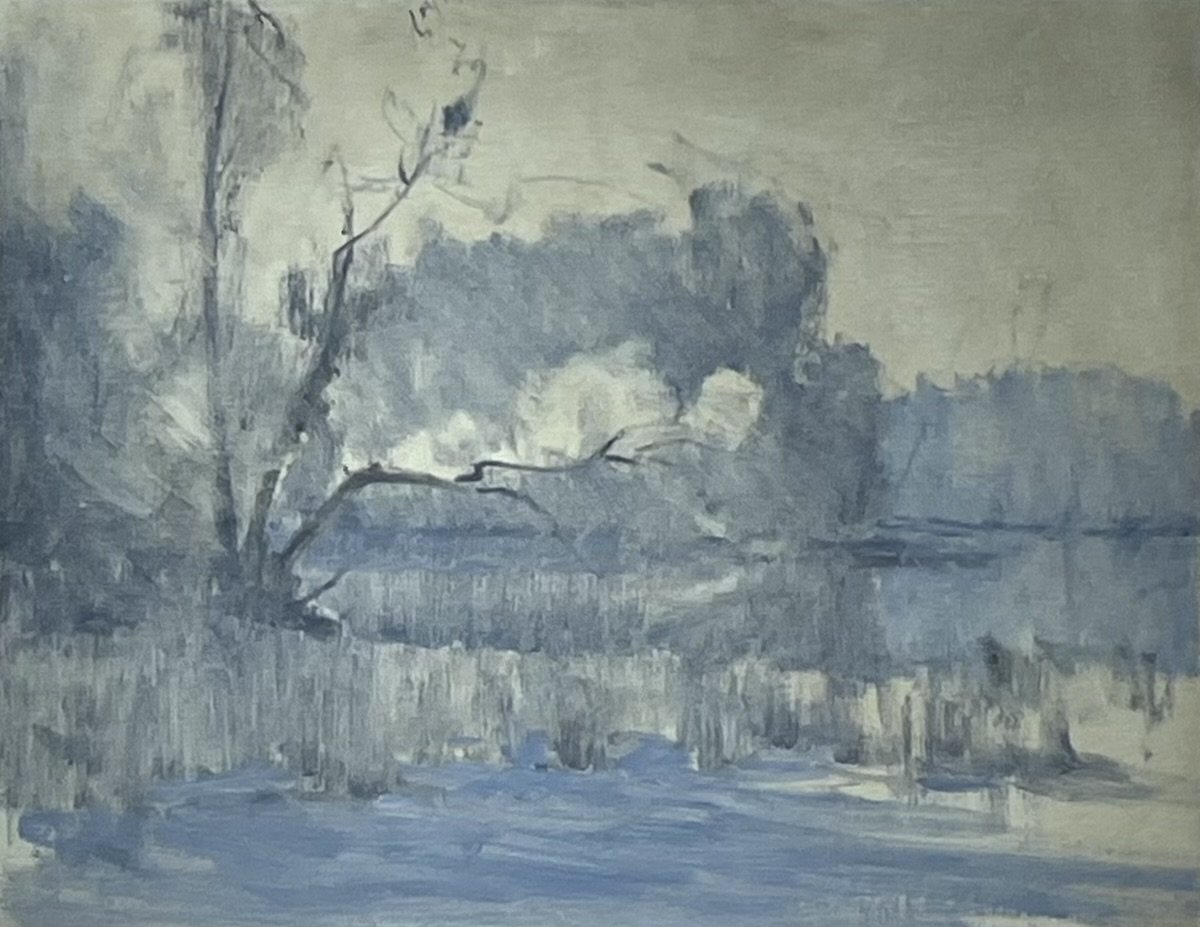
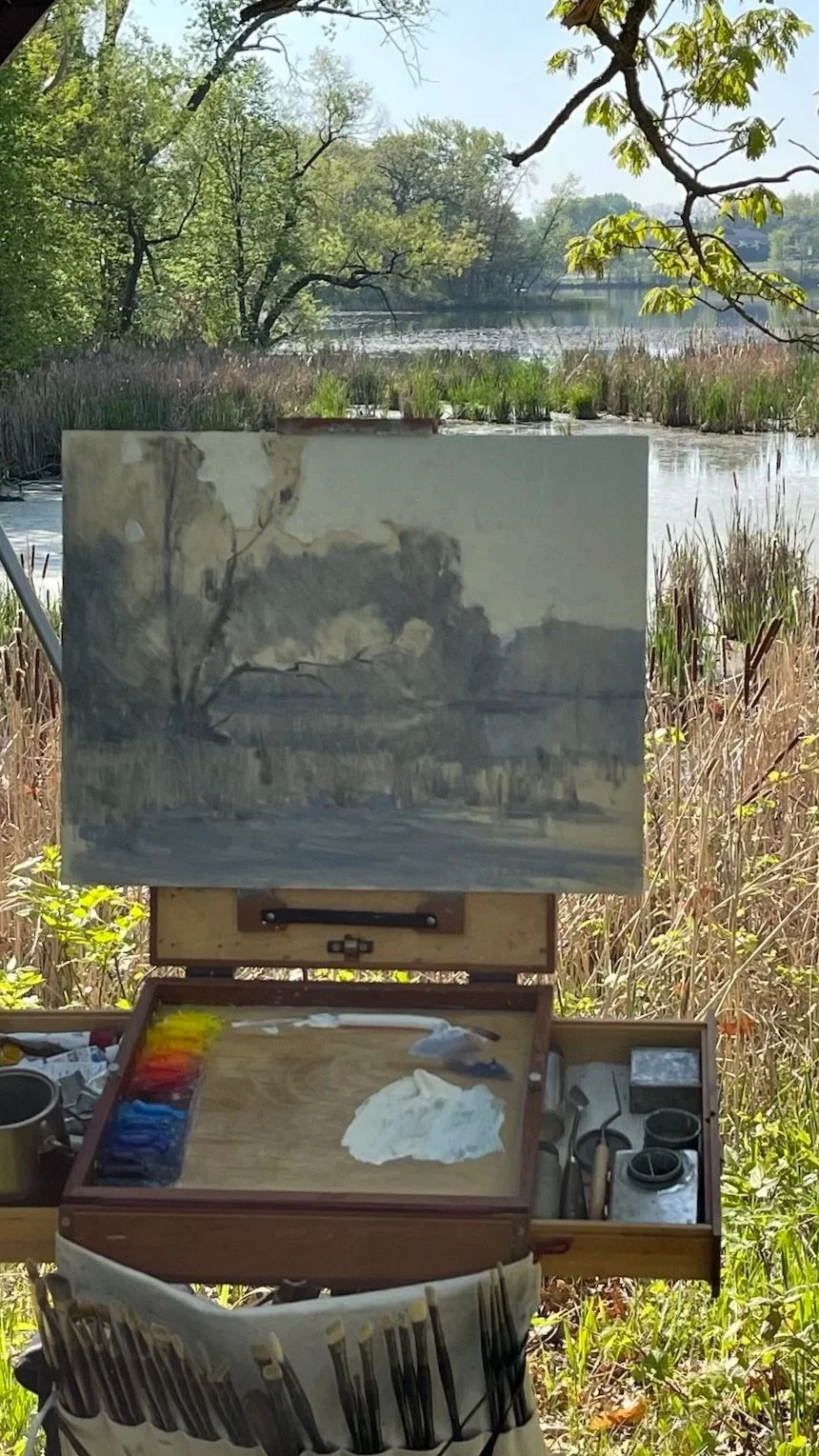
No Payne’s Grey goes into the areas of light. The underpainting is in place, so I begin addressing the areas of light, and start with the sky. It is one of the largest parts of the painting, and will give me a high value to key off of as I continue.
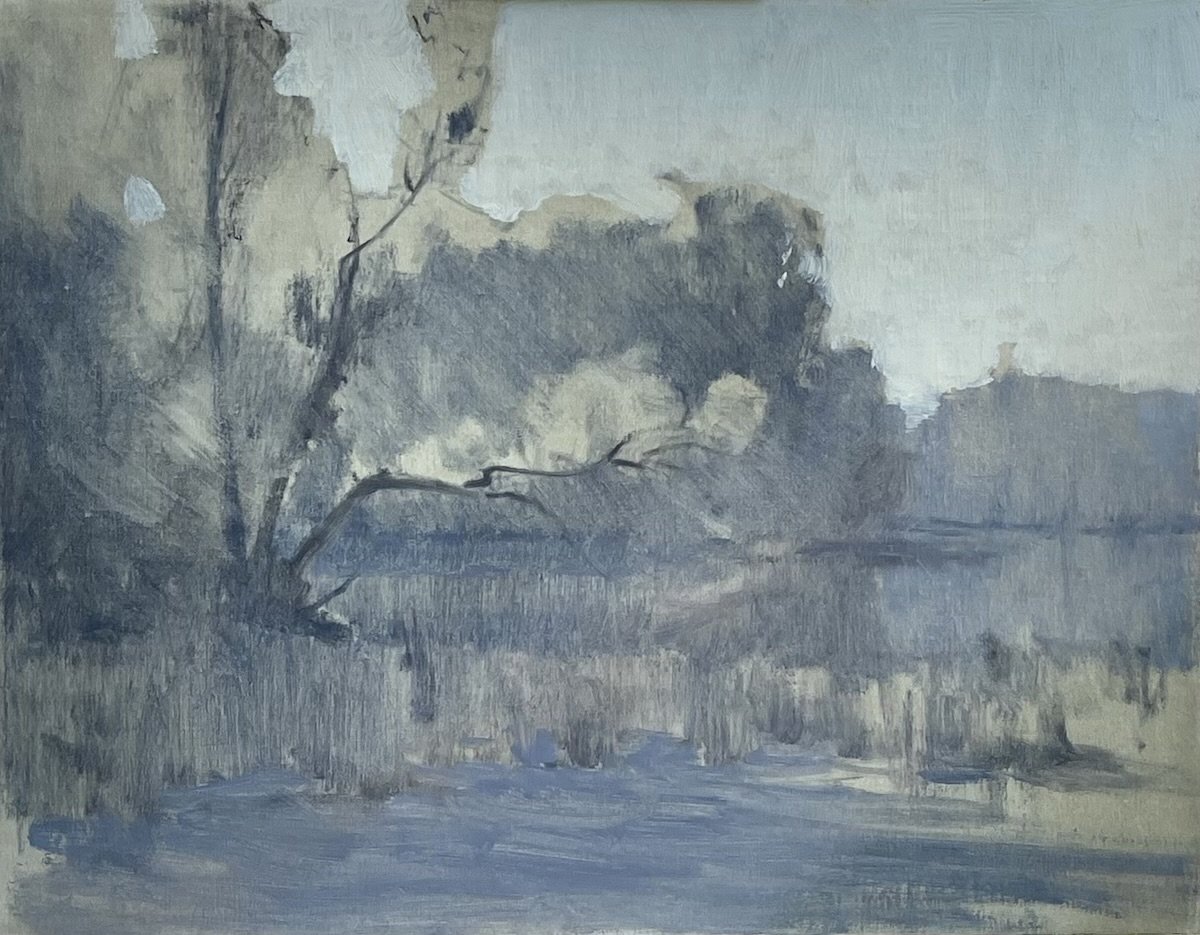
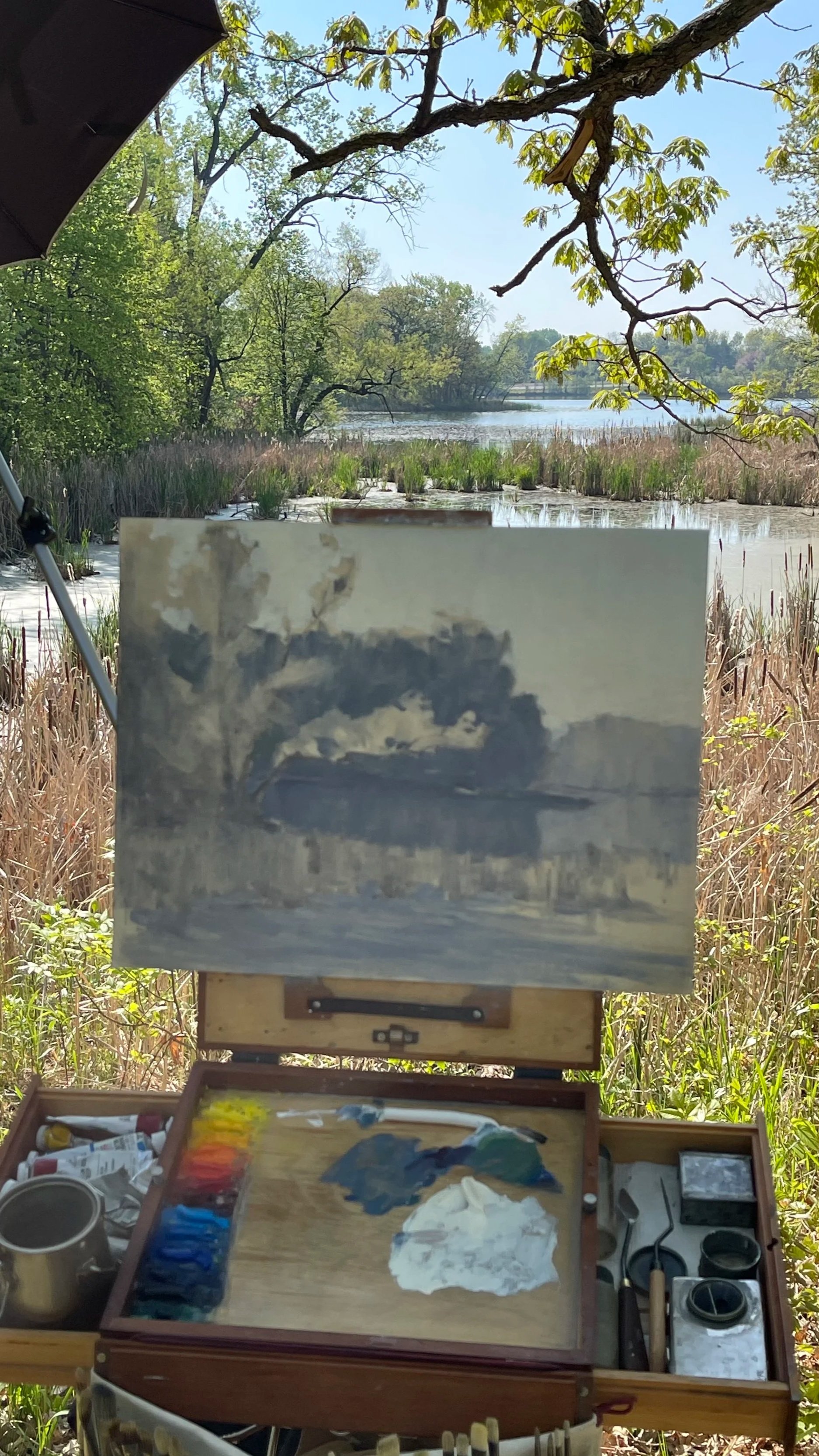
As I paint the sky, I cut back into the edges of the earth-bound shapes, so when I lay them in, I will bring them back over the sky, and it will recede into the distance. Keying off the sky, I paint the richer colors and values of the middle shore and its reflection. I am keeping in mind what colors will be coming
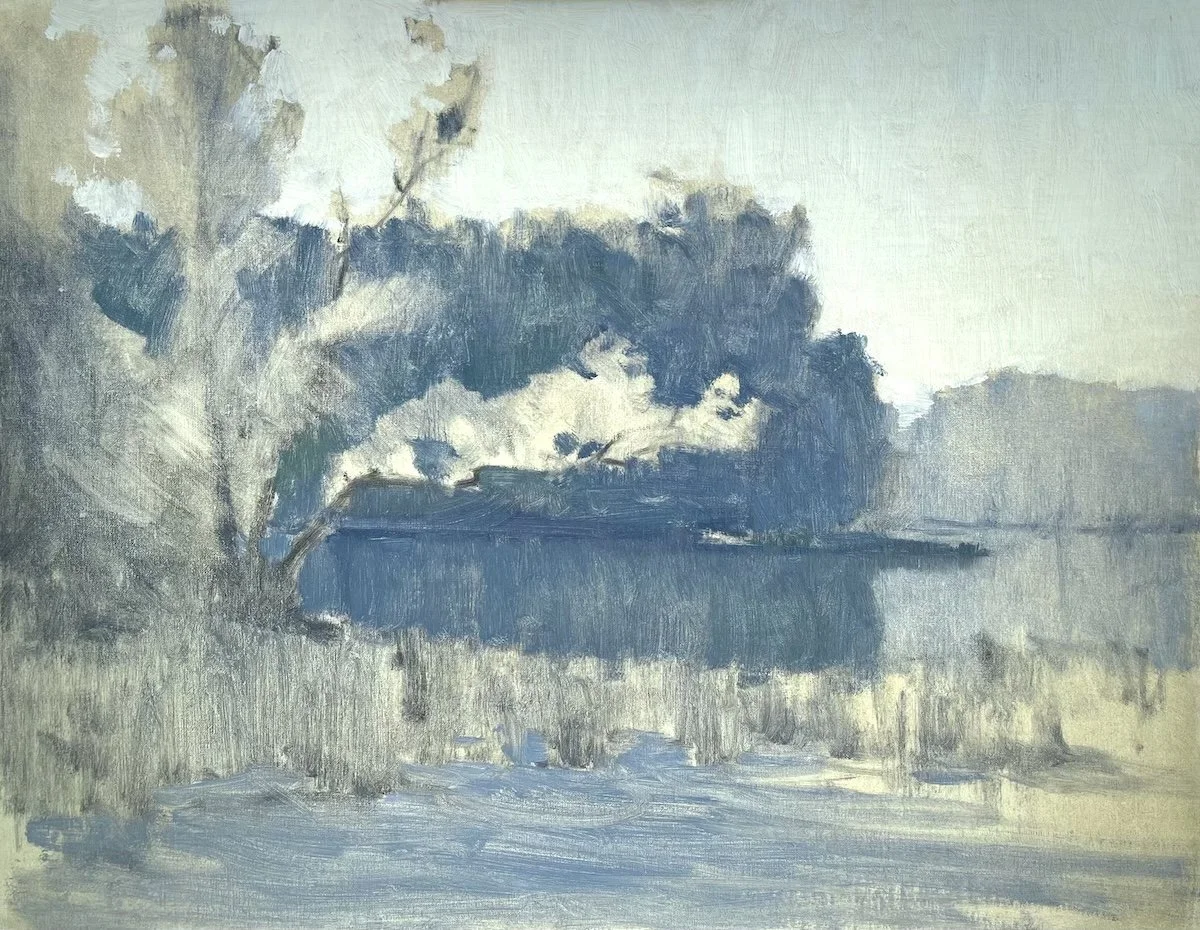
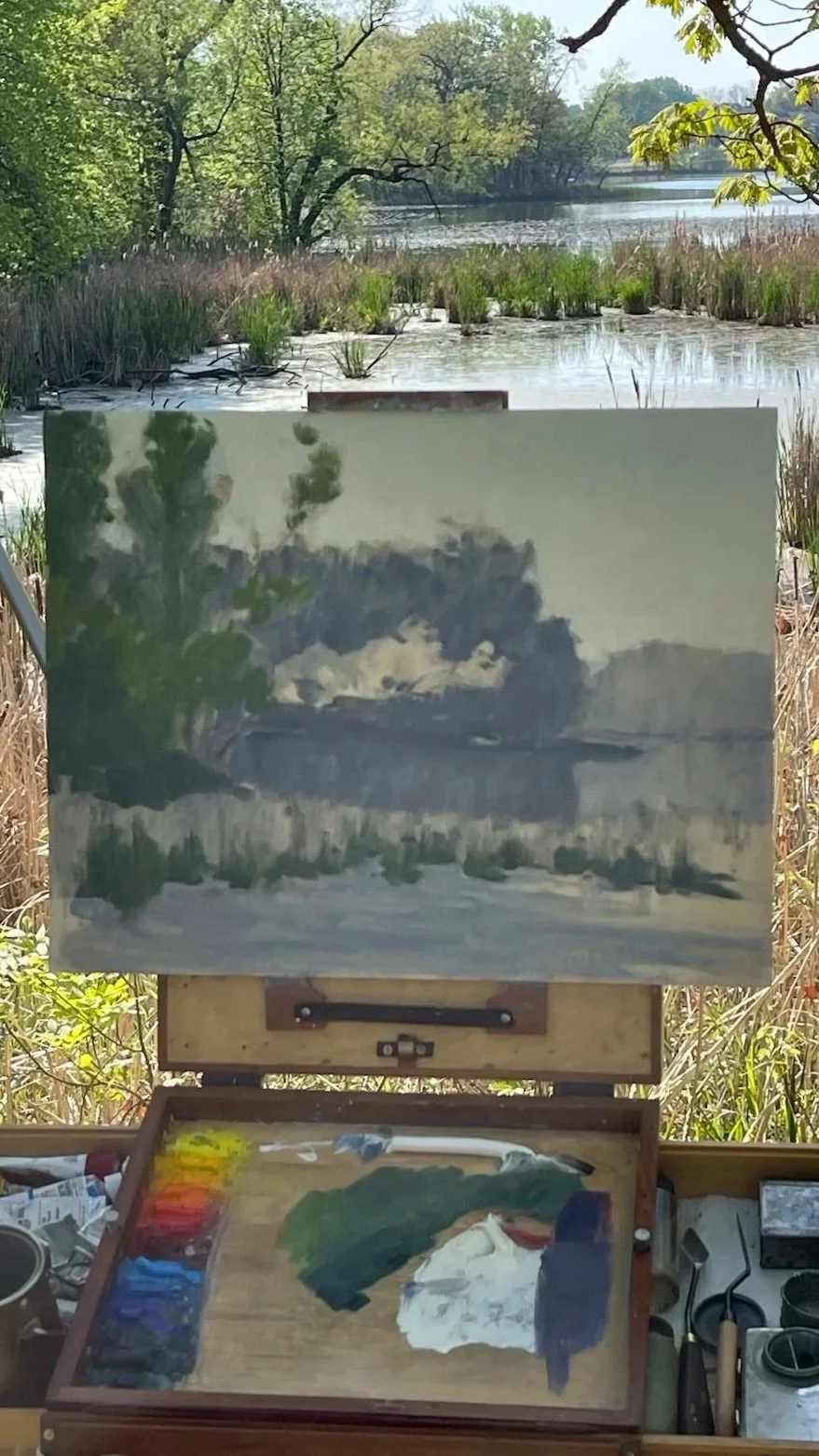
Much of this scene is backlit, so much of it is in shadow. But it is spring and the leaves are budding, so there is indirect light amidst them. I mass in the upright green values of the trees and new grasses.
Keep Squinting.
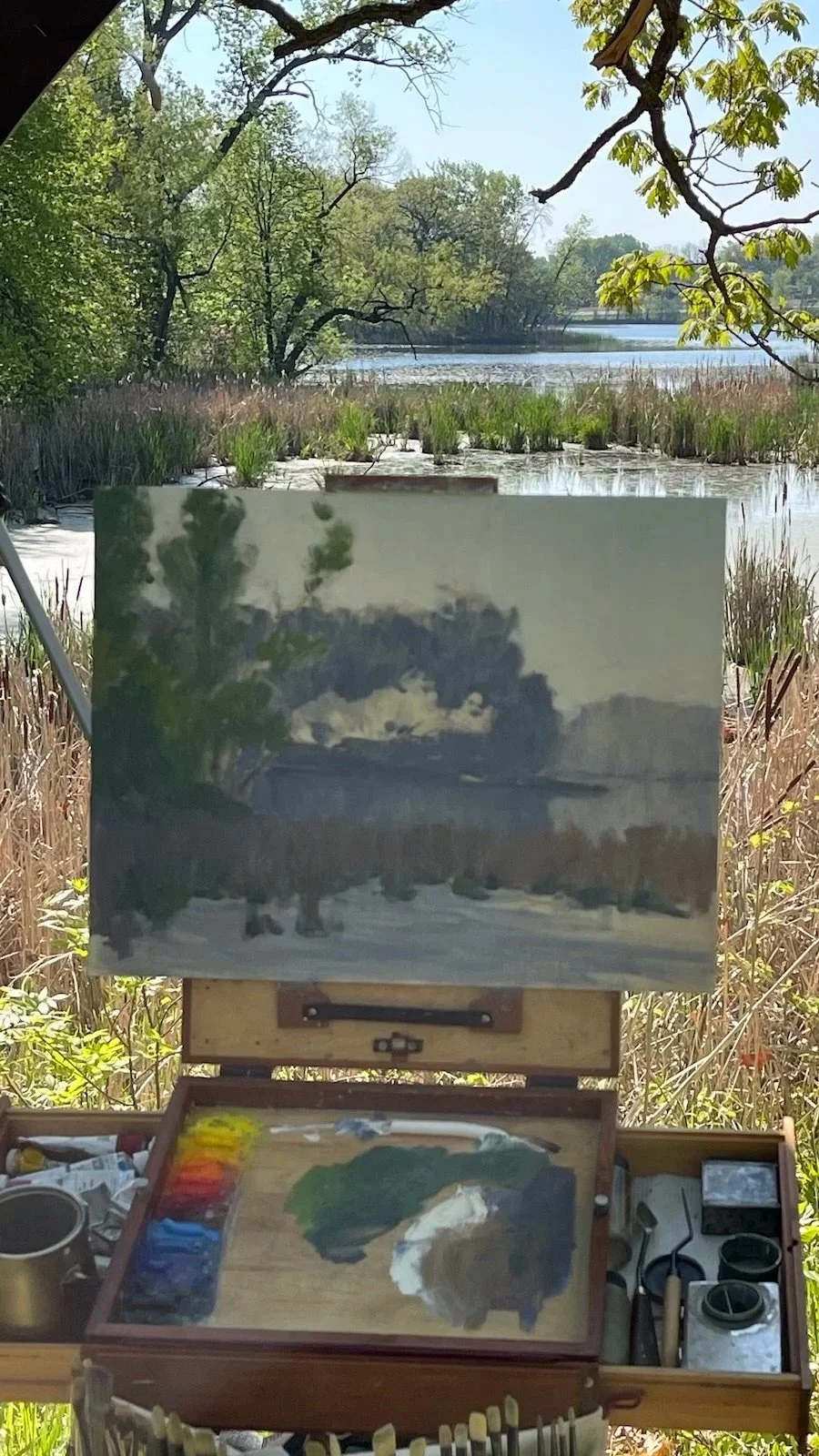
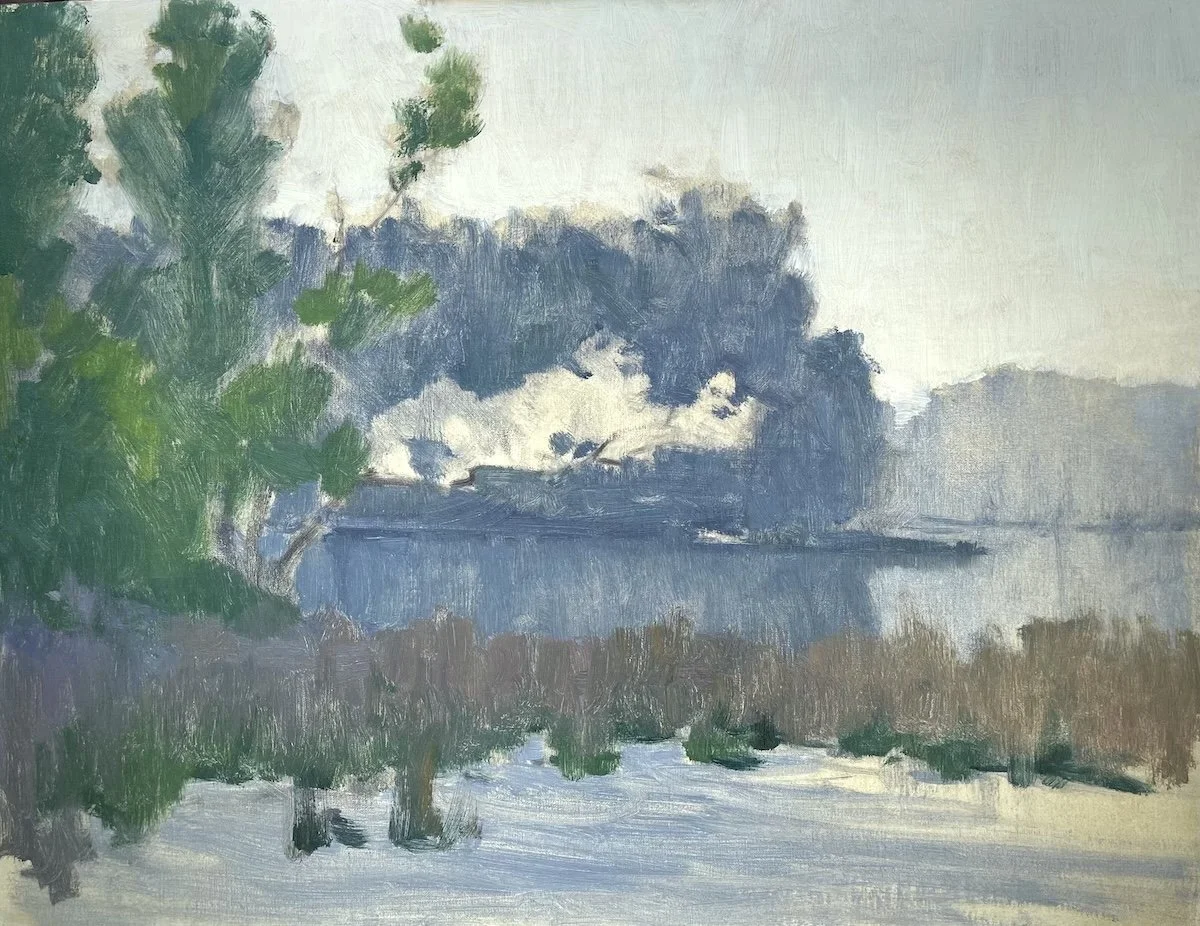
Next, I lay in the mass of the old reeds, adjusting their temperature and value from a darker blue-violet in the deepest shadows to a relatively warmer and lighter orange-violet beige as they extended into the light.
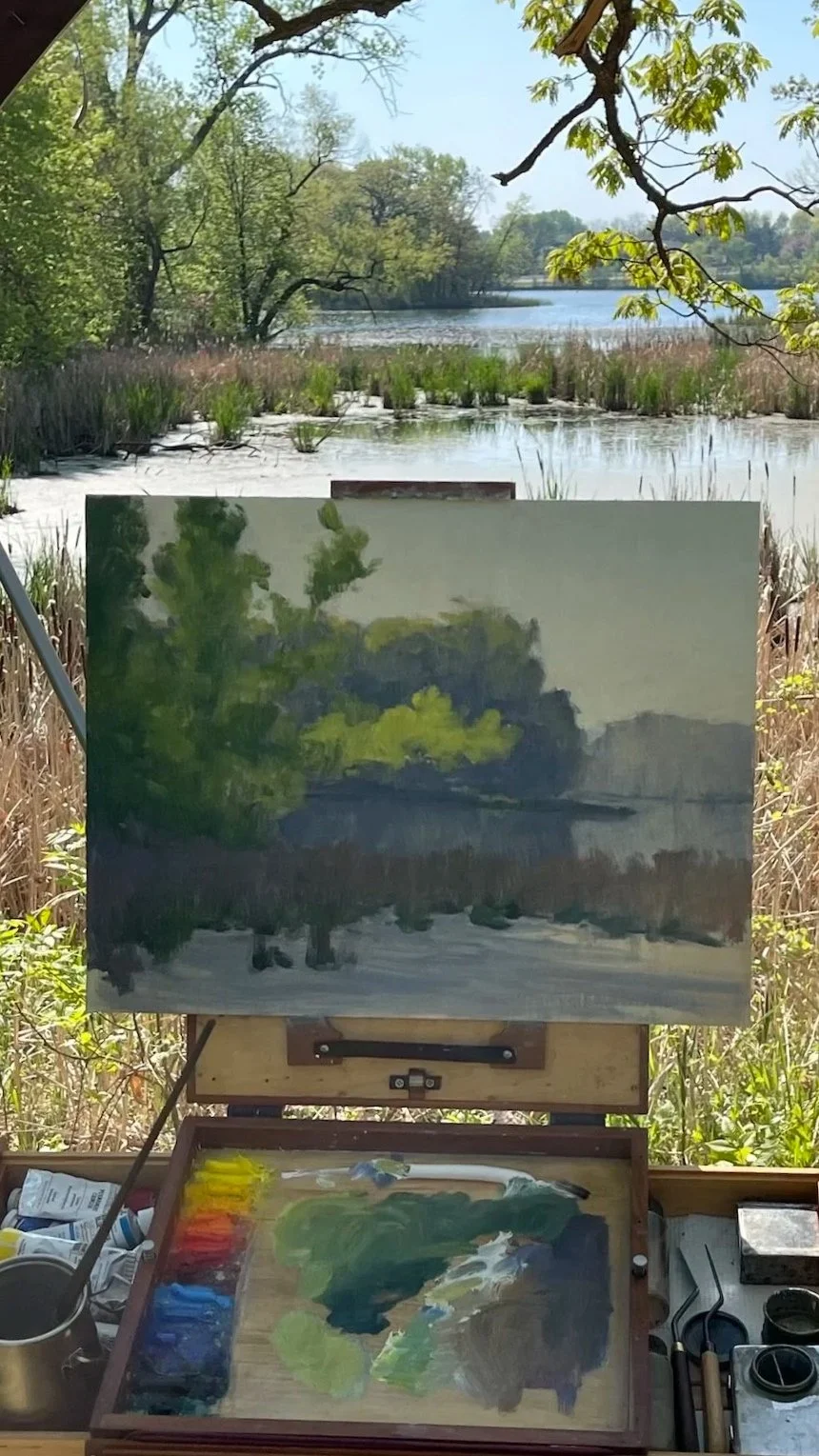
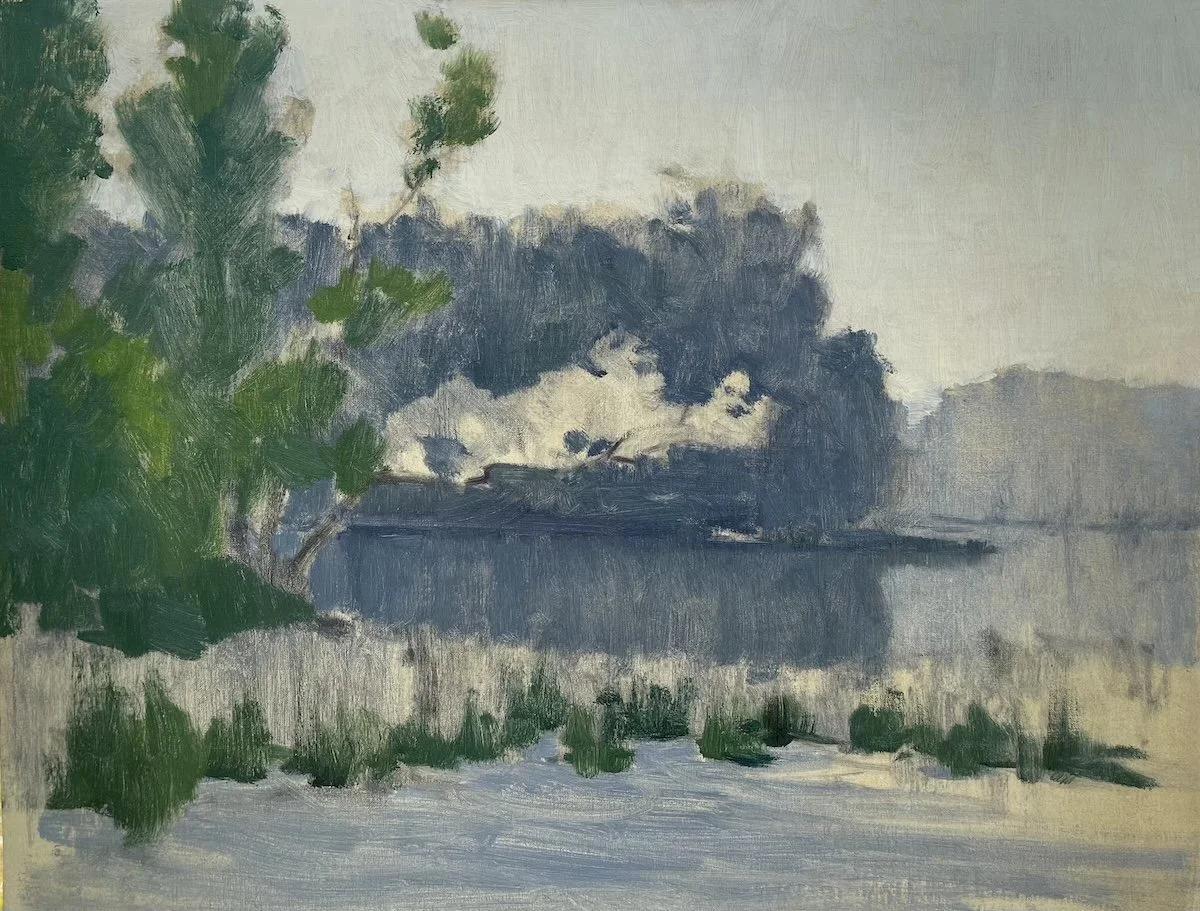
Next, I put in the greens in the light. In some, we see light shining on them while others are lit up - like a flashlight behind an earlobe. I am taking great care with the masses. I also put in the distant greens in the light across the bay.
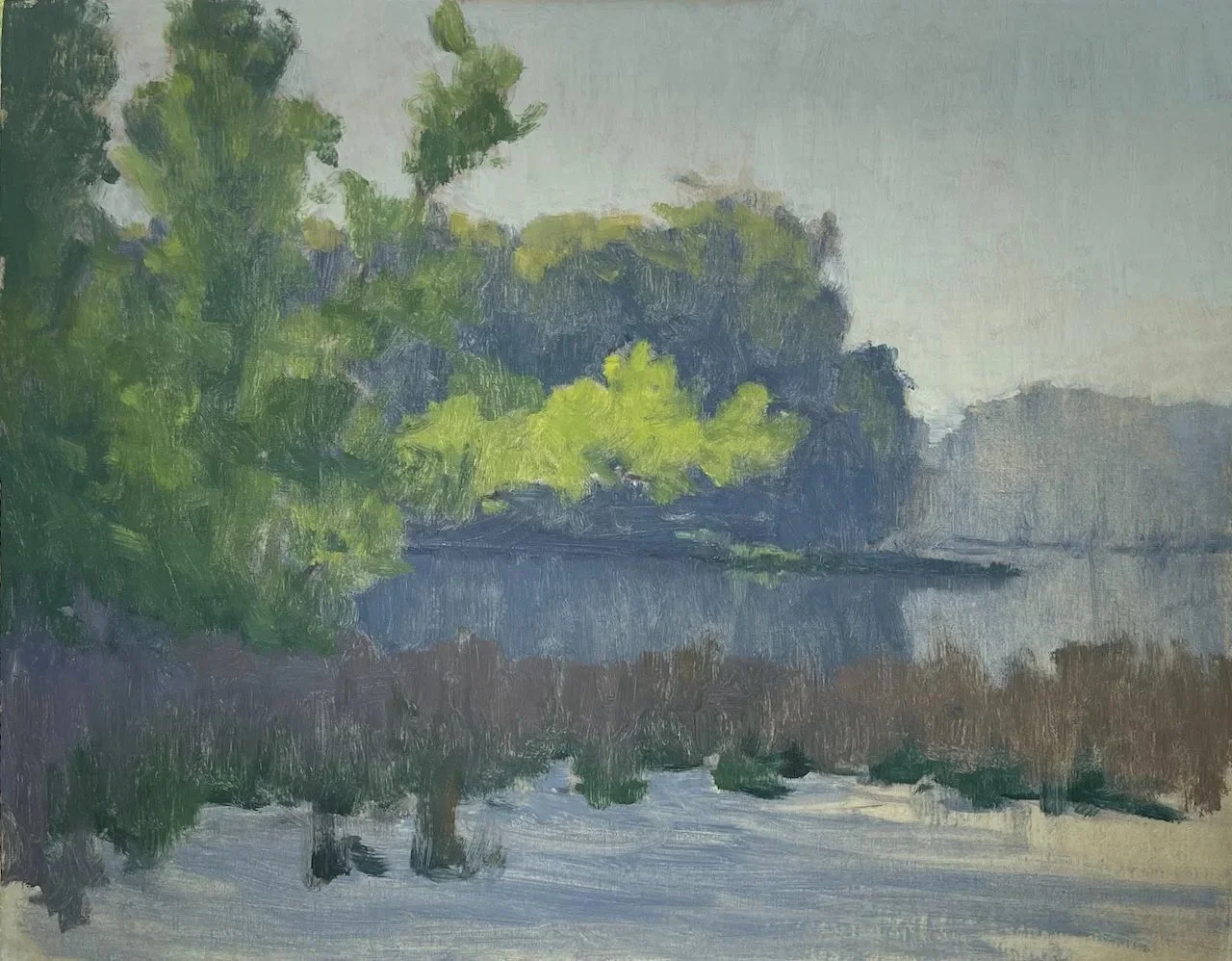
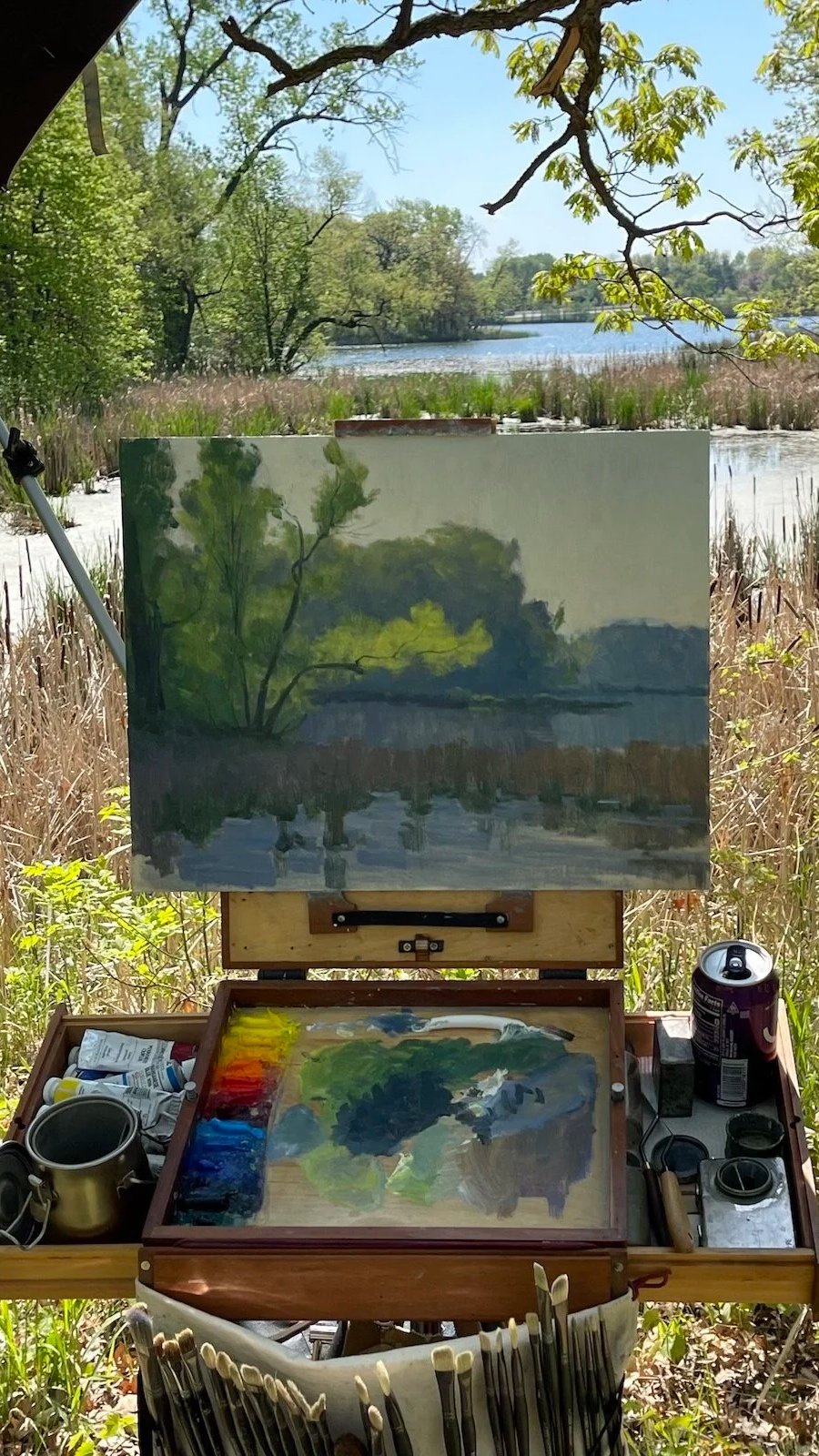
I continue squinting down before I go back into my masses and find the lovely character of the tree trunks and the deeper shadow of the shore. I went into the middle bay to show the character of the shape, plane shifts, and atmosphere.
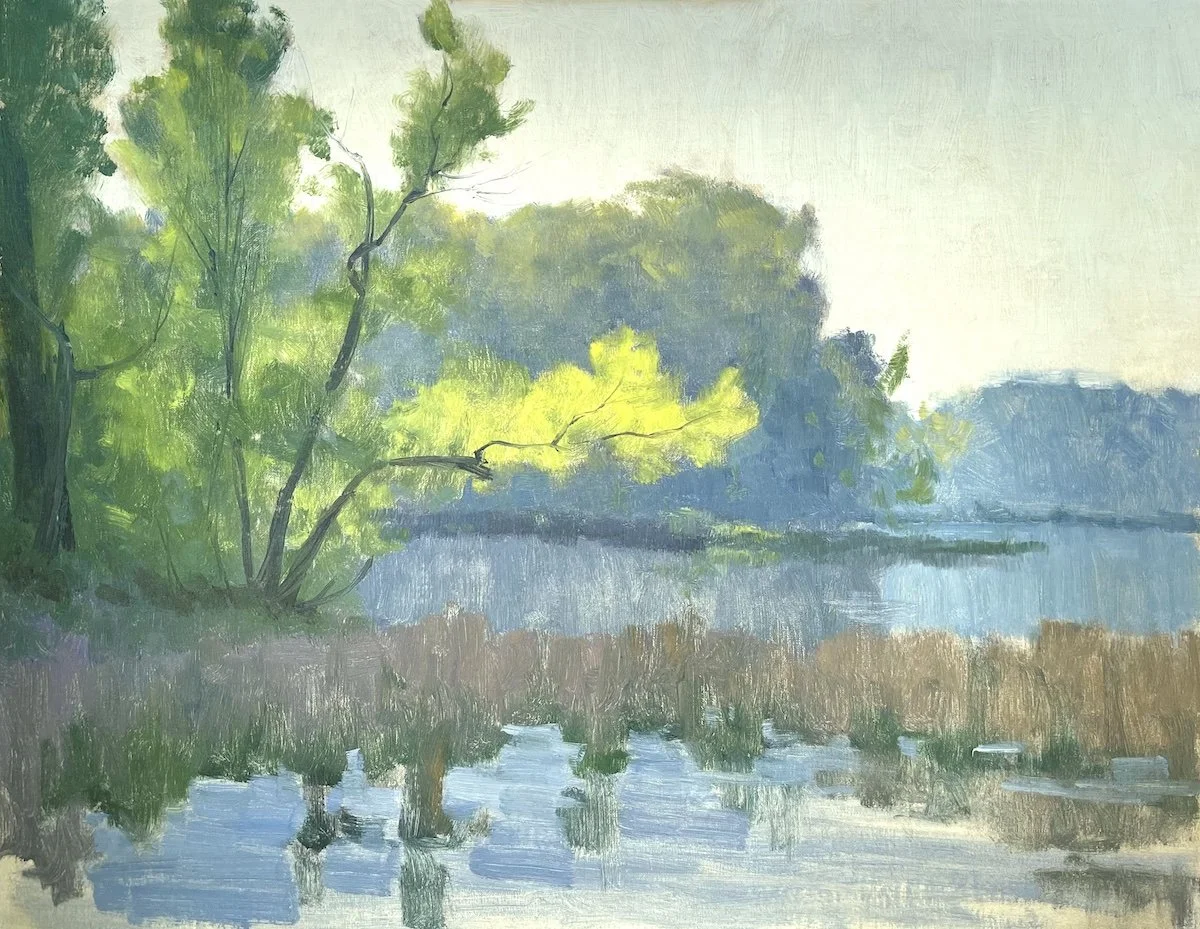
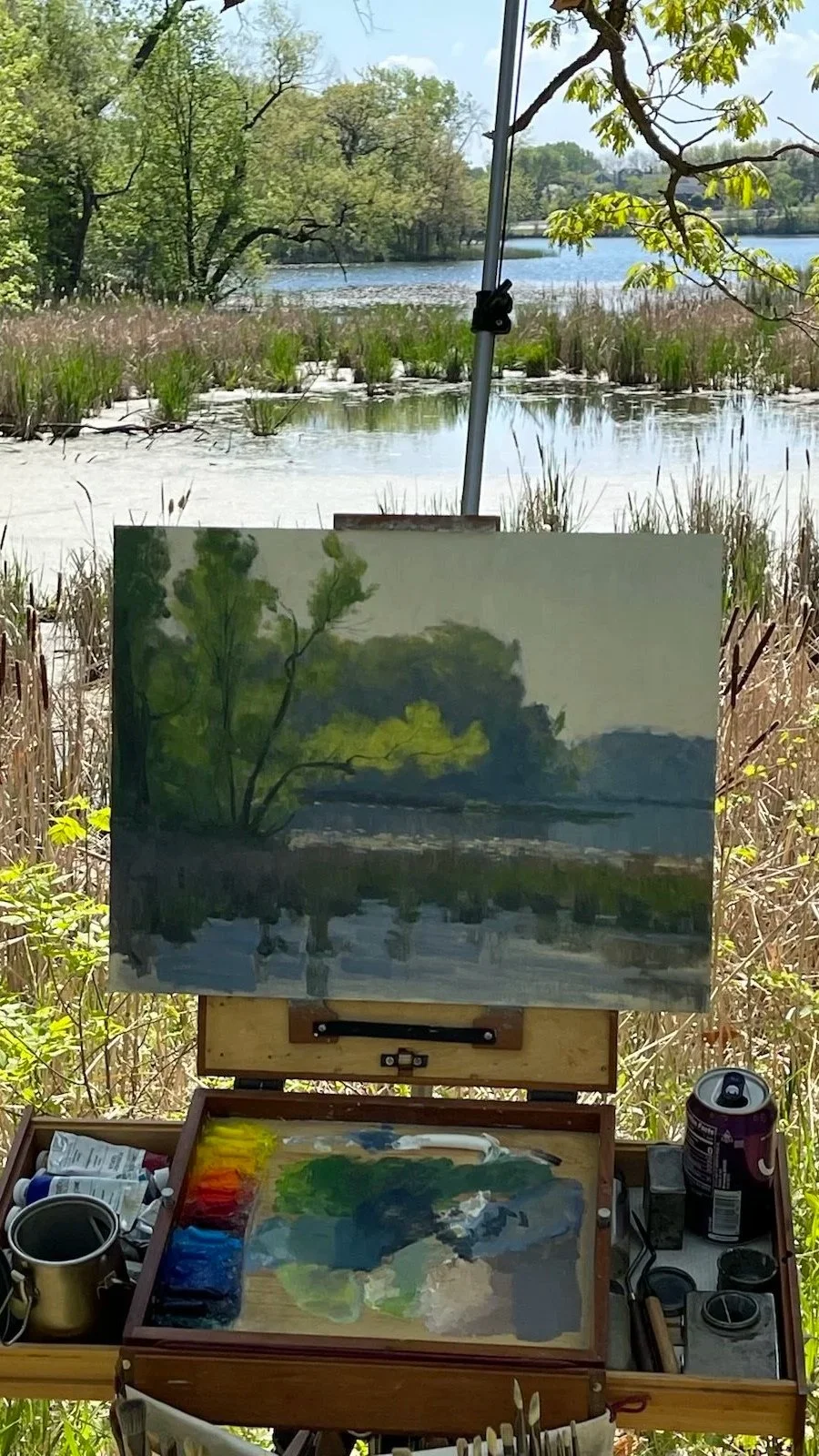
The lily pads are not very green or fully grown, but they disrupt the surface and are wet enough to catch the sun's glint off them, providing an exceptional and interesting light to help express the movement of light through the scene.
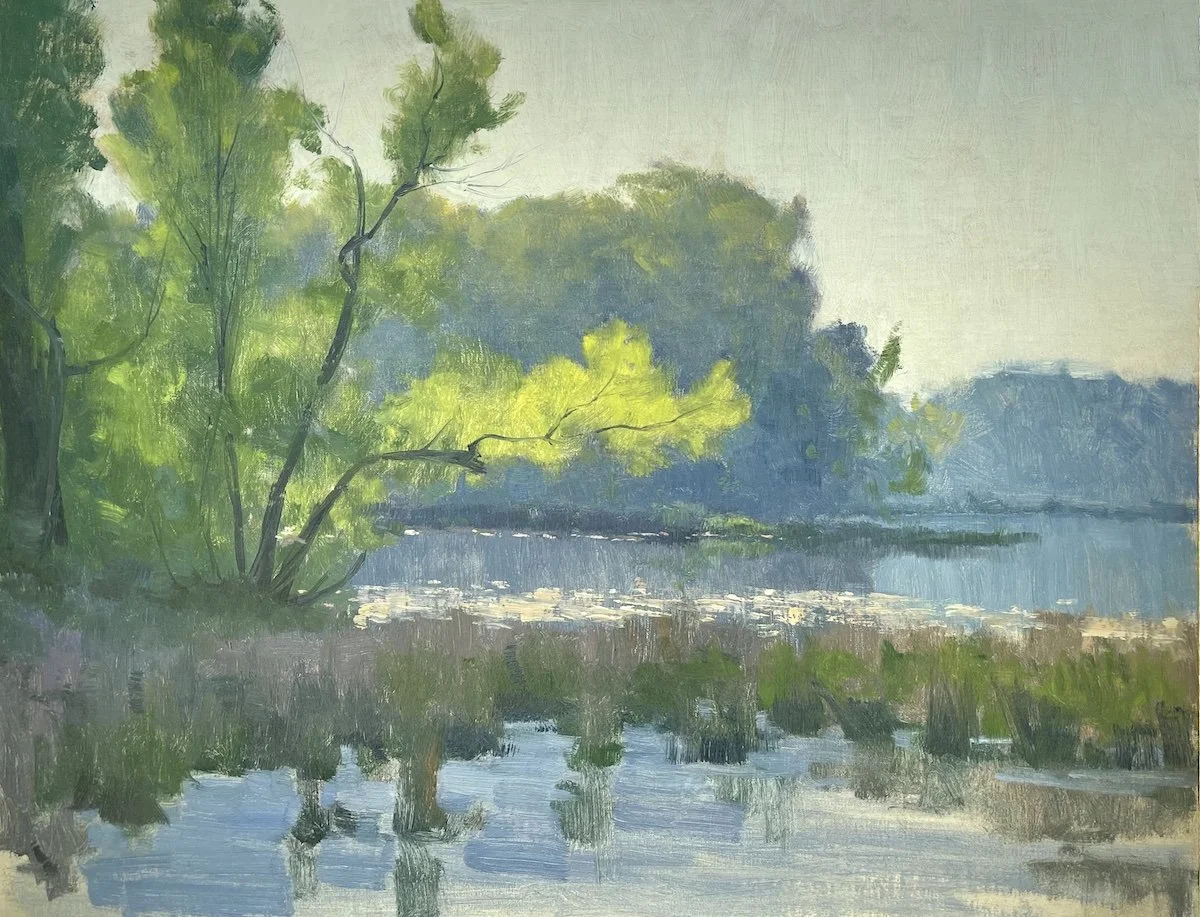
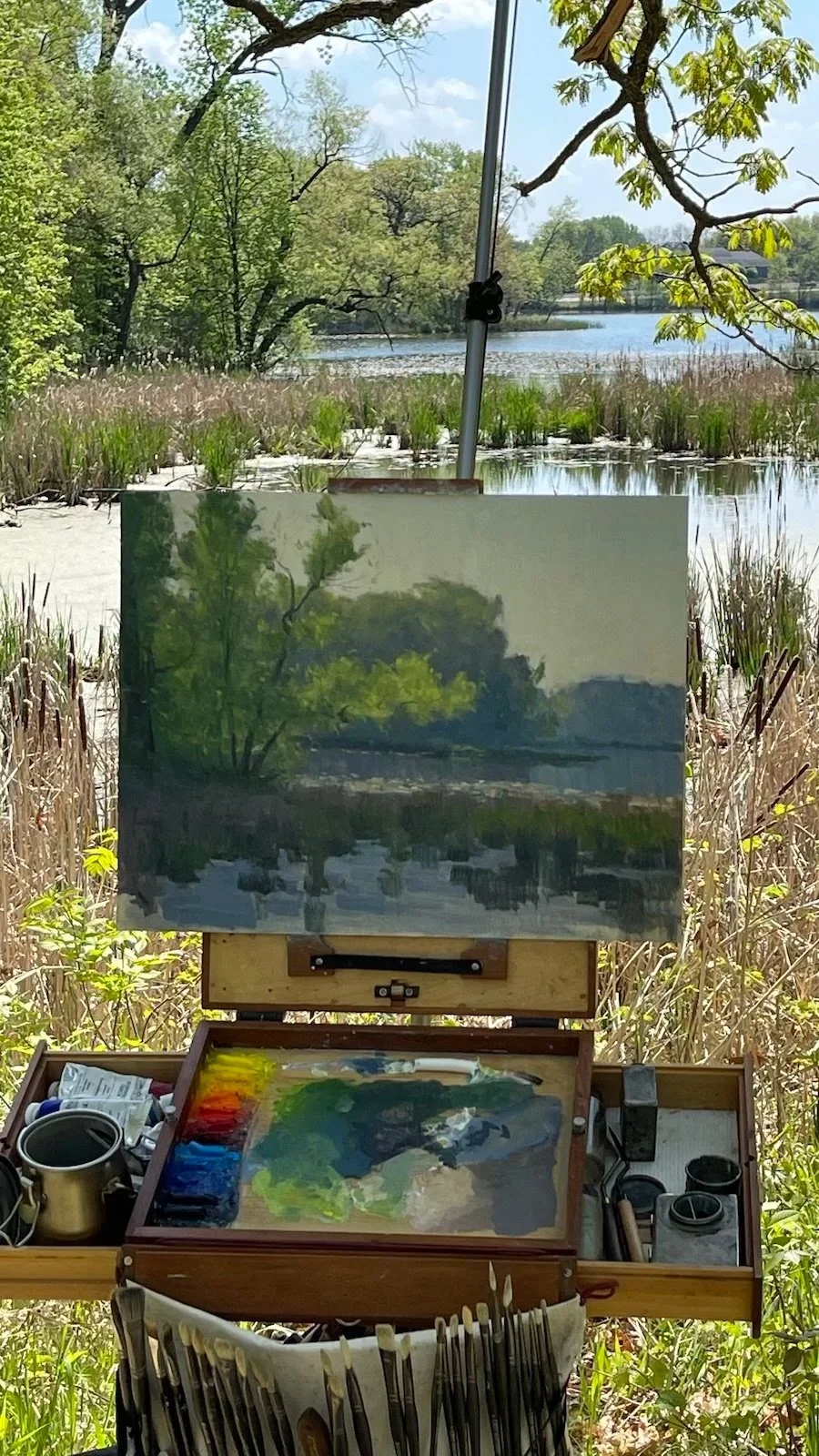
The illuminated lily pads showed us that the reeds were not rich enough. I squint down to find a unified value of the vertical plane of the reeds as they reach the light. I also seek out the character and lost & found shapes of the leaf masses. Anchoring the reeds with their reflections by bring the darks down in preparation to depict the pond scum moving horizontally across the surface.
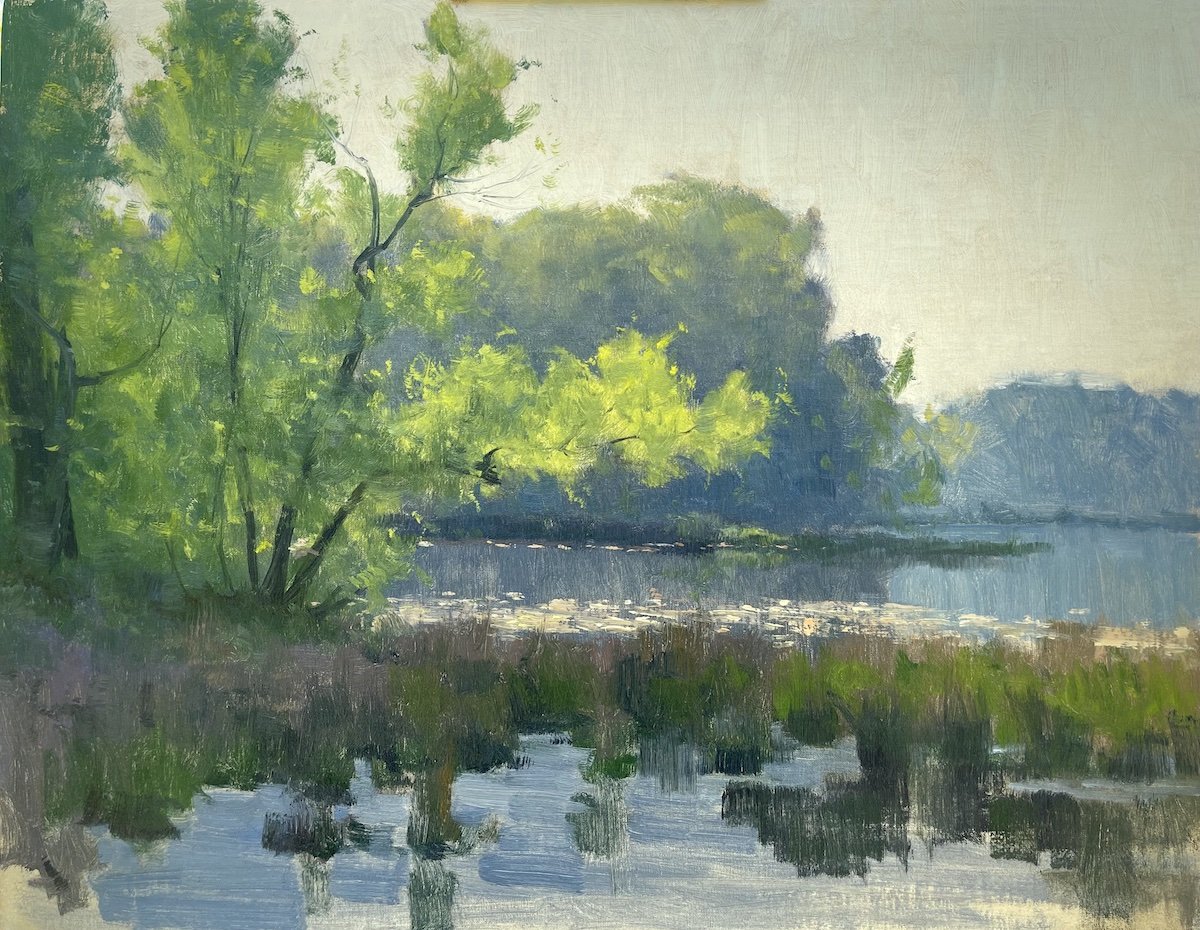
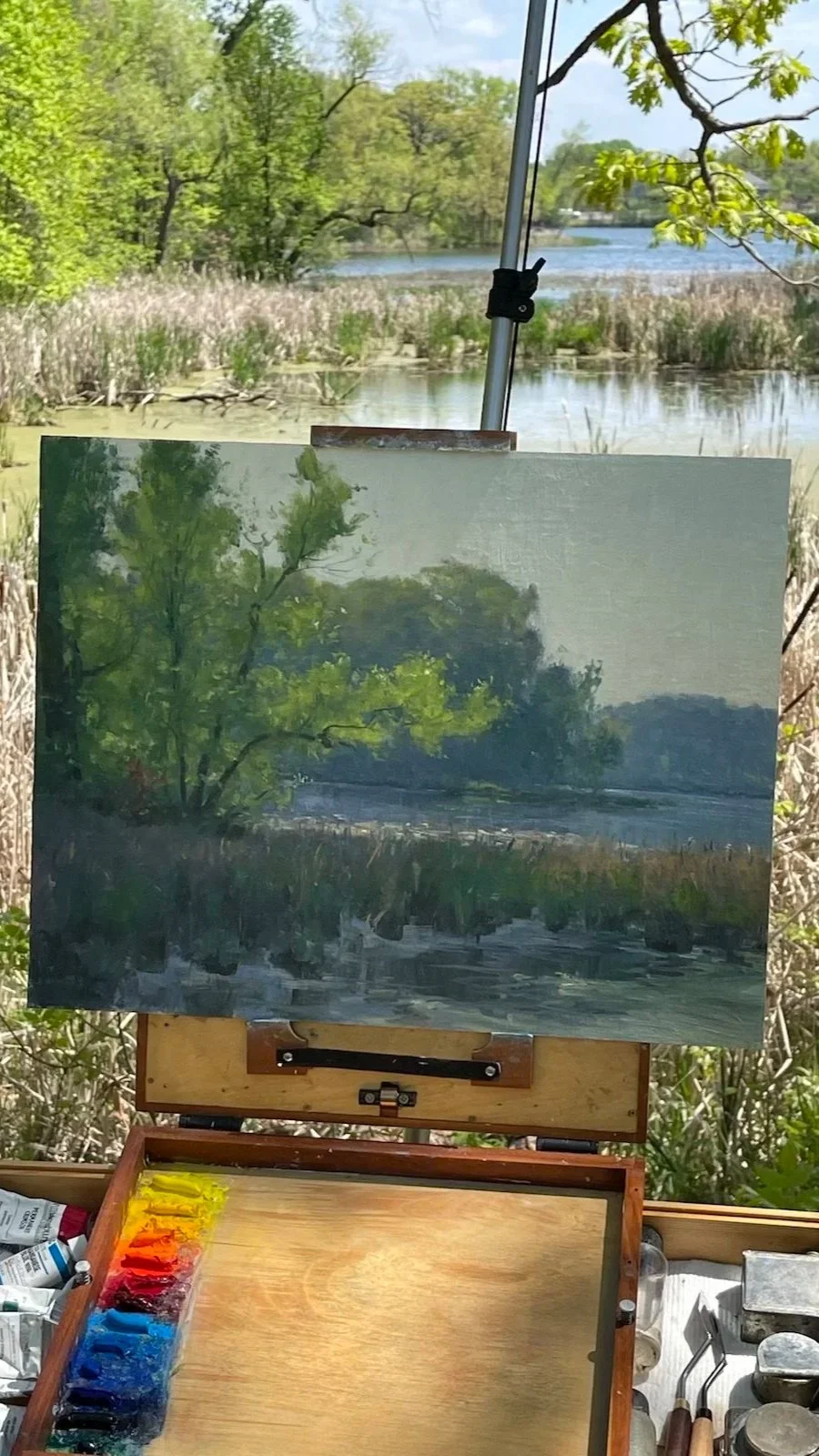
Nearing the finish, I work across the painting as a whole, identifying any areas that have fallen behind and bringing them back into alignment with the rest of the piece. Not looking for details, but rather looking for rhythms, form, unity, variety, and interest.
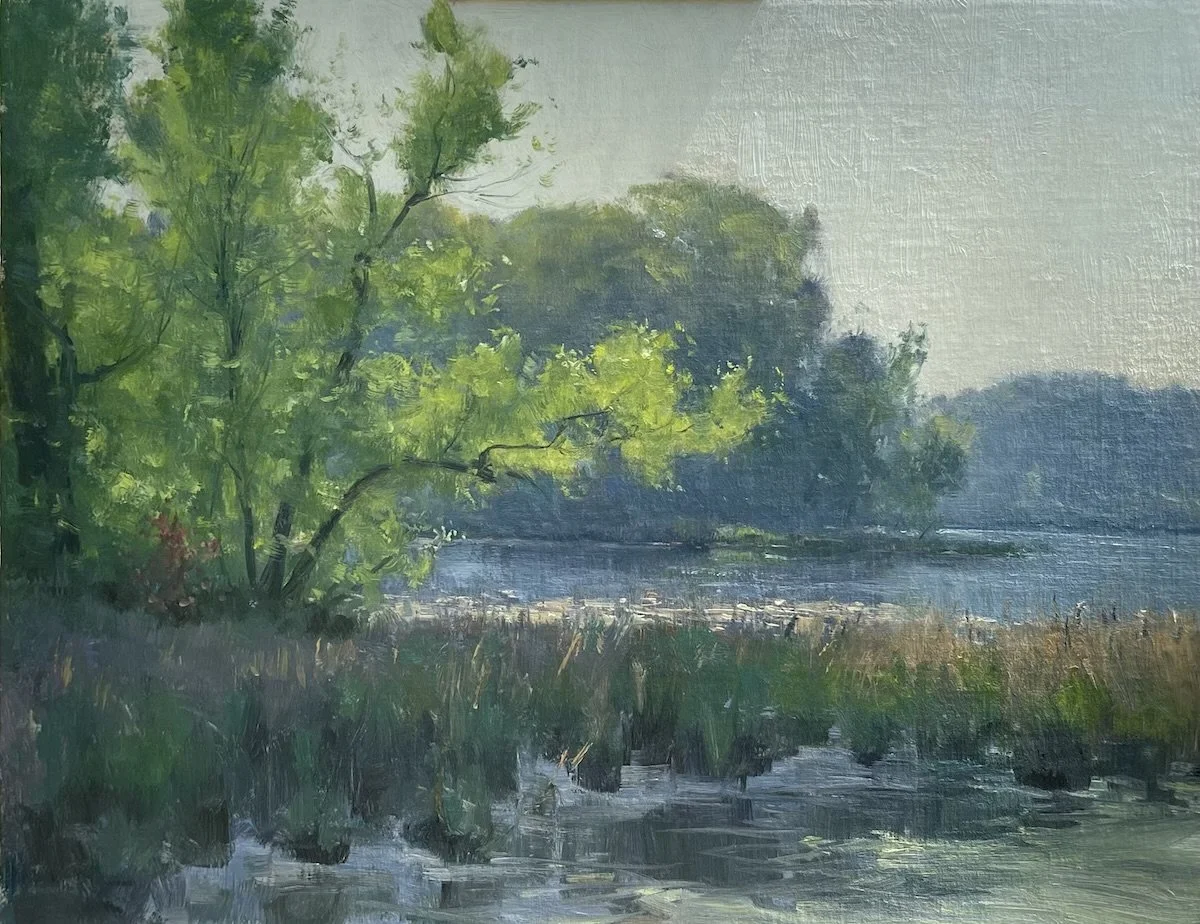
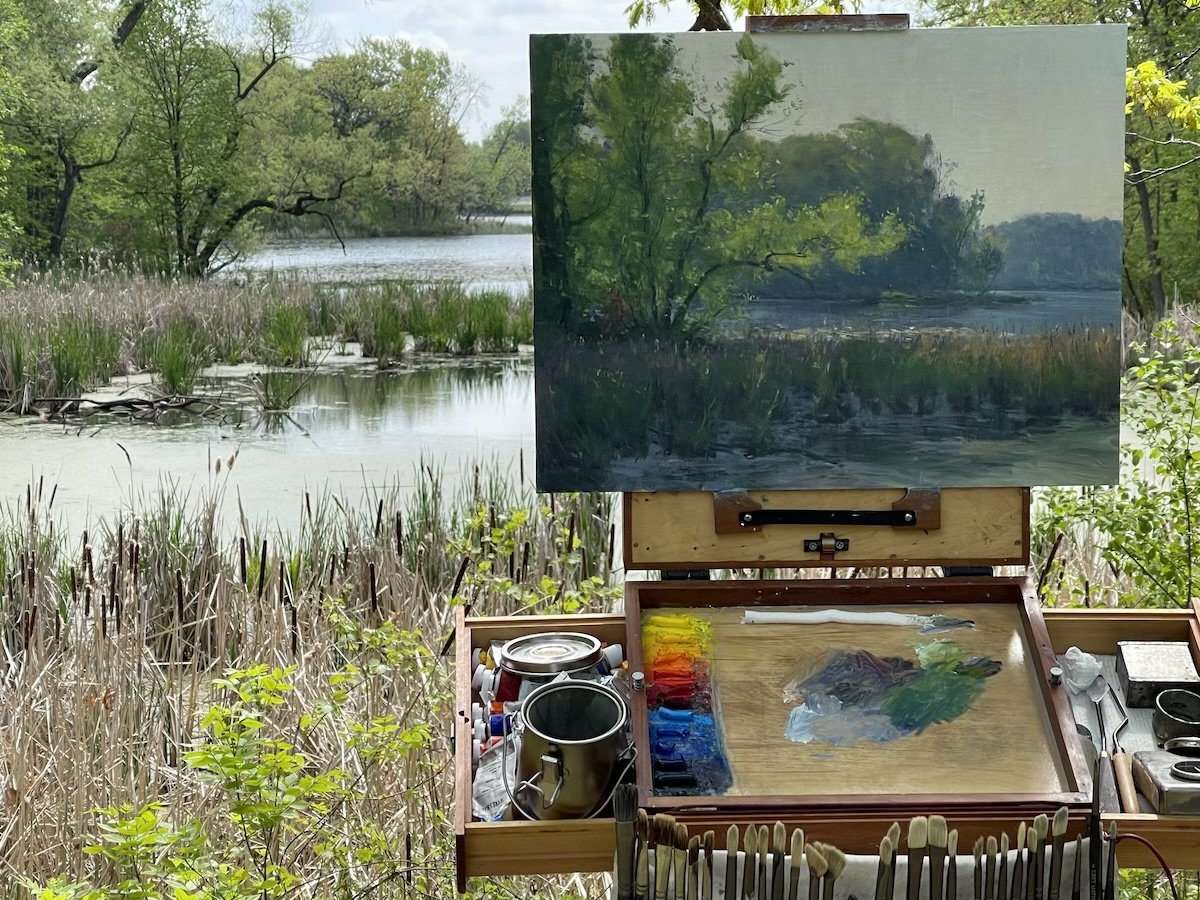
I decided to go back the next morning, well rested and ready to go back over the piece with fresh eyes. Looking to refine and clarify anything. Not to fix as much as to downplay, play up, or edit. This time is about what's best for the painting.
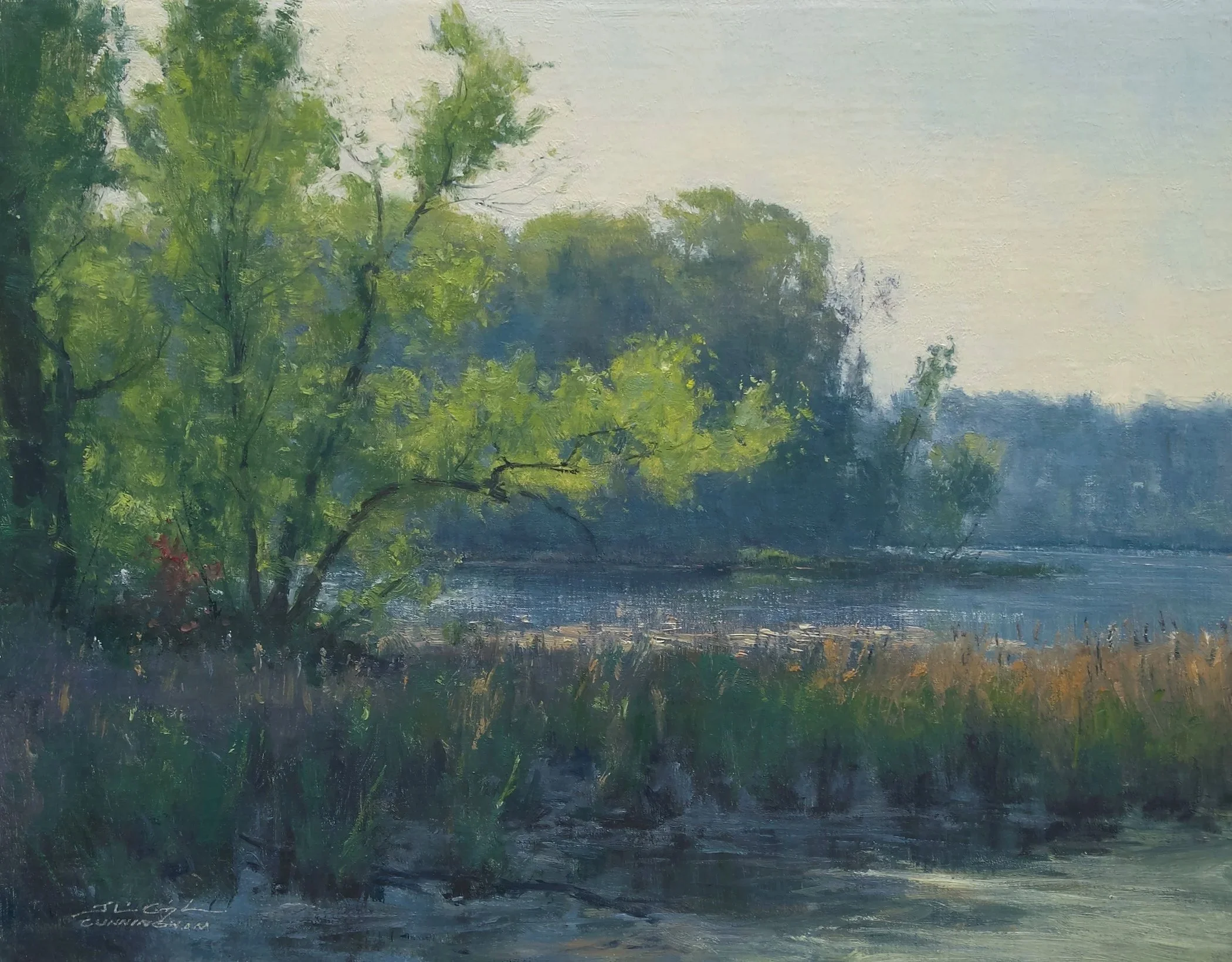
May Morning
14”x18”, Oil on Linen
Inquire